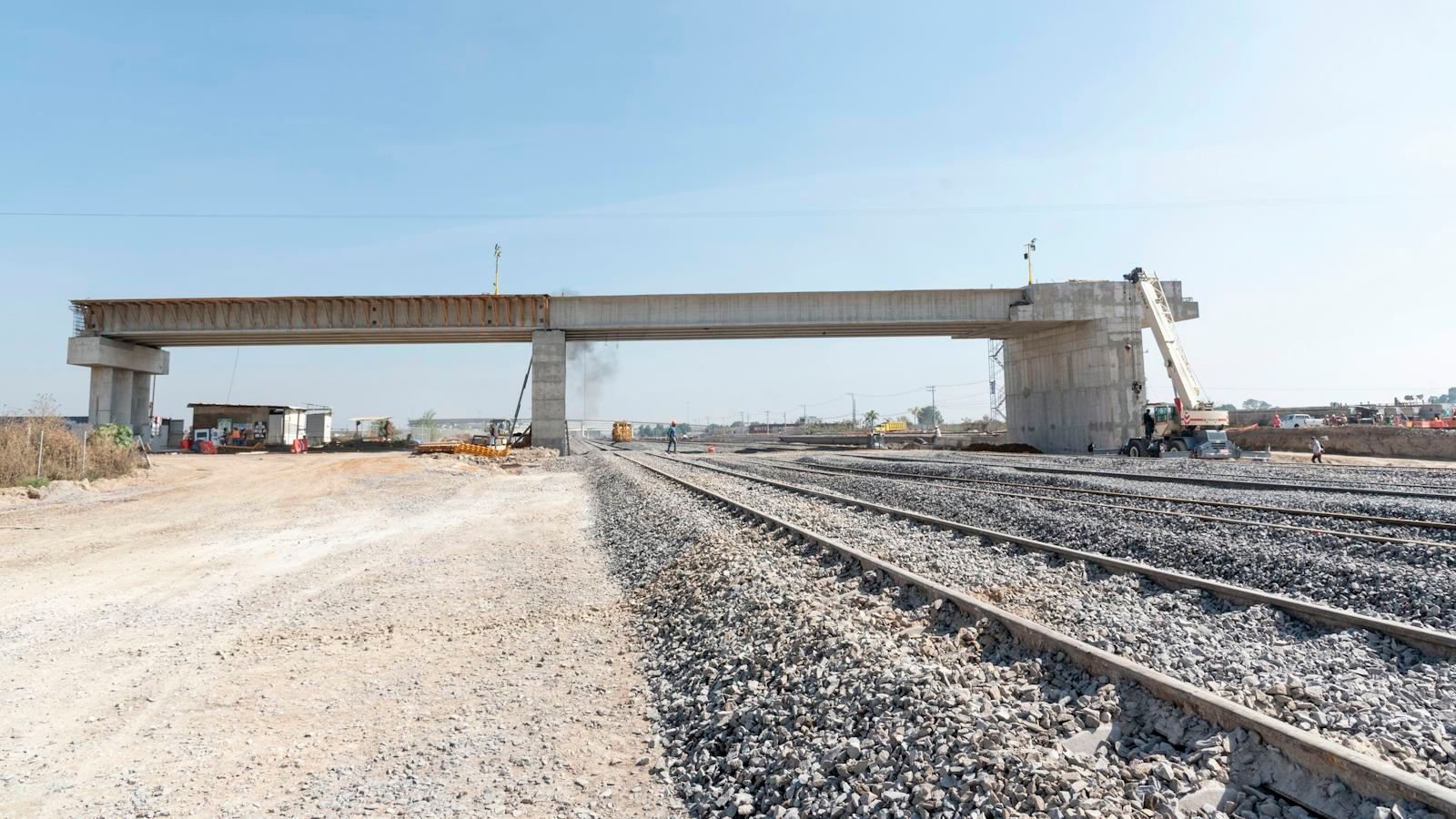
Lay the track before you buy the bullet train
Contents
Frontier models get a new generation every few months, yet most companies are still piloting AI. On October 12, Snowflake published a piece on taking manufacturing agents from pilot to production, and its opening numbers make the point.1 Here’s how I see it: AI is the bullet train, and a company’s data foundation is the track. You can’t buy the train first and lay the line later, and no company gets to skip the cost of the line.
In the EU, the US and China, AI users are still a minority
Snowflake cites its own Global AI and Data Trends Survey: 2,050 enterprise leaders, 288 of them in manufacturing. 52% of manufacturers already run live AI in core supply chain and operations. The vendor also says 41% of manufacturers are stuck in “pilot limbo”, 50% still use spreadsheets as their main working data layer, and 65% of supervisors spend hours each shift reconciling reports that don’t match. The article doesn’t say where those last three figures come from.1
Official statistics point the same way. Eurostat found that 19.95% of EU enterprises with 10 or more employees used AI in 2025: 55.03% of large firms, 17% of small ones.2 The US Census Bureau found that 19.8% of businesses had used AI in the two weeks before May 3, 2026, and 37% of firms with 250 or more employees.3 In July, China’s Ministry of Industry and Information Technology said AI use among manufacturers above the official size threshold had passed 30%.4
These three measure different things, so don’t rank them. All three only count whether firms use AI at all. Deloitte surveyed more than 140 manufacturers: 84% report measurable value from AI, but only about one use case in five has been scaled across sites or company-wide.5 Few companies use AI, and fewer still have scaled it.
Most are stuck on the track: data still lives in spreadsheets and plant systems
Snowflake’s roadmap has four stages, and the first two are track work. Stage 1 connects shop-floor systems (historians, SCADA, MES) to ERP, supply chain planning and CRM. You leave it when one analyst can answer a cross-functional question, such as which supplier delays drove schedule changes, without pulling from three systems. Stage 2 adds a semantic and trust layer. You leave it when you can put a dollar figure on AI’s effect on at least one operating KPI.1
With half of manufacturers on spreadsheets, many can’t pass stage 1. An agent needs unified data with access controls; in spreadsheets it can’t find everything or tell which copy to trust.
Once the track is down, the train is fast. Toyota Motor Europe built a data mesh on Snowflake and Iceberg tables that follows a vehicle from the factory to the road, without copying data. The vendor says it matched and exceeded six months of hard-coded AI infrastructure in under three weeks.1 It also shows what the track is for: data you can find, read and trust from one place. Moving to the cloud or a lakehouse is the usual route. How much you move depends on which questions you can’t answer today.
Track isn’t enough: you need signals and dispatch too
Among EU firms that considered AI and didn’t adopt it, 70.89% cited a lack of expertise, 52.52% unclear legal consequences and 48.83% data protection and privacy concerns.2 Deloitte’s manufacturers ranked high implementation costs first (43%), then lack of technical expertise (35%), resistance to change (35%) and regulatory concerns (34%). Data availability and quality came in at 30%.5
Snowflake’s own cautionary case is Penske Logistics. Its trailer intelligence model worked technically, then stalled because nobody had defined production exit criteria before launch.1
Stage 3 is worth copying as written. An inventory agent approves purchase orders under $10,000 and sends larger ones to a person; you leave the stage after 90-plus days with no human override on a decision that mattered. Wolfspeed’s troubleshooting agent cut one equipment sequence from about two hours to two minutes, and every guide it generates must include audited plant safety procedures.1 Write the signalling rules first, and the train can go fast.
Stage 4 chains agents: maintenance triggers scheduling, scheduling adjusts the supply chain, and the plant manager confirms once. Snowflake gives no exit test for it.1 Following stage 3, mine would be one cross-process chain running end to end with a single human confirmation, and 90 days with no one reworking its results.
If you build data and AI systems, inspect the track first
- Pick one cross-team question and count the systems and spreadsheets it takes to answer. That is Snowflake’s stage 1 exit test, and it doubles as a health check.
- Before a pilot starts, choose an operating KPI you can turn into money, such as unplanned downtime.
- Write the exit test on day one: the spending limit for the agent, how long you’ll watch it, and who can overrule it.
- Order the migration by the questions you can’t answer, starting with the data path that blocks the business.
Snowflake sells a data platform, so read its roadmap with that in mind. Still, the EU, US and Chinese statistics agree that AI is moving fast and most companies’ data foundations haven’t kept up. Closing that gap costs real money, and every company, manufacturers above all, will have to pay it in what people are calling the fourth industrial revolution.
References
- From Pilot to Production: How Manufacturing Leaders Scale AI and Win C-Suite Approval, Snowflake
- Use of artificial intelligence in enterprises, Eurostat
- Large Firms With at Least 20 Employees Biggest AI Users, U.S. Census Bureau
- 持续向新向优发展——上半年工业和信息化领域成绩亮眼 (Science and Technology Daily), 科技日报
- AI in Manufacturing 2026: From pilot value to scaled industrial impact, Deloitte
Comments
Anonymous comments appear after review; signed in with GitHub, X or Facebook, they appear at once. Your email stays private and is only used for reply alerts.
Comments couldn’t load. Try again later.